Principle I
People sing when they have been formed to sing.
If a congregation is silent, the first question is whether the people have been prepared, invited, and given a familiar doorway into prayer.
Reflections from Rasaan Hakiem on collaborative sacred music ministry, choral transformation, worship formation, and the future of liturgical leadership.
A choir does not become beloved because it merely sings the right notes. It becomes beloved when the people hear themselves, their faith, their grief, their joy, and their hope carried by a sound that has been formed with care.
My deepest work has been helping volunteer singers discover that excellence is not reserved for professionals. With trust, discipline, pastoral care, and a shared vision, a parish choir can become a professional-quality chorus while remaining rooted in community.
If a congregation is silent, the first question is whether the people have been prepared, invited, and given a familiar doorway into prayer.
Sacred music ministry is strongest when clergy, choir, accompanists, cantors, children, and congregation understand that worship belongs to the whole Body.
Volunteer choirs can be warm, joyful, and deeply human while also becoming disciplined, beautiful, responsive, and musically serious.
People worship most freely when familiar words, melodies, and gestures become vessels of confidence rather than anxiety.
Sacred music is not simply about playing the Mass or the service. It is about praying it and carrying the congregation into mystery through sound.
Liturgical Intelligence™ grows from the conviction that churches need tools that remember, contextualize, and strengthen ministry.
“The future of sacred music will be secured by forming musicians who pray what they play, and congregations who sing what they believe.”Rasaan Hakiem
It helps churches move from scattered planning to organized memory. Instead of starting every week from a blank page, clergy and musicians can plan from a living knowledge base.
The goal is not to replace ministry. The goal is to preserve wisdom and give leaders back time for people.
Planning Sunday by Sunday instead of season by season. Church music is cumulative.
A healthy music year has an arc. It repeats, teaches, stretches, consoles, and prepares the congregation to enter more fully into the sacred mysteries.
The deeper question is not whether the organ is still relevant. The deeper question is whether we are forming enough musicians who can truly lead worship from the organ.
The Church does not simply have an organ problem. It has an organist formation problem.
Churches should hire for leadership, not performance alone. The strongest leaders build ministries that can flourish long after they are gone.
The question is not only, “Can this person do the job?” It is, “Can this person form people, build trust, and leave the parish stronger?”
The role has expanded from musician to ministry strategist. Today’s music director must understand liturgy, technology, communication, formation, volunteer leadership, cultural fluency, and pastoral care.
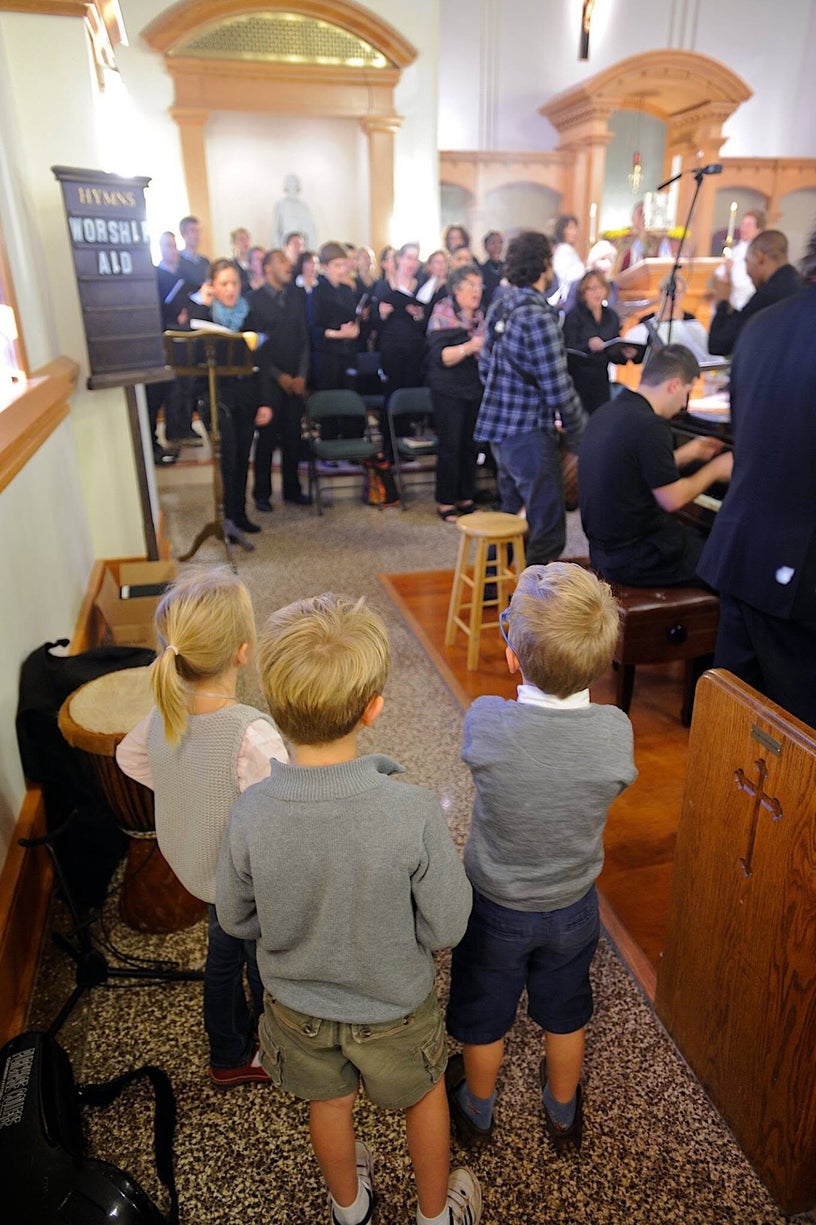
This image matters because it says something no résumé can say. The children are not reading a strategic plan. They are watching adults make sacred music together.
That is the kind of ministry I believe in: music that forms not only the choir, but the whole parish watching and listening.
A reflection on organist formation, improvisation, liturgical instinct, and the musicians needed for the next generation.
Essay SeriesHow trust, rehearsal culture, pastoral leadership, and shared purpose can transform a parish ensemble.
Case StudyWhy people worship more freely when music, text, and ritual have formed them deeply enough to pray without anxiety.
FormationA theological and practical argument for technology that preserves wisdom rather than displacing ministry.
Liturgical Intelligence™Why sacred music planning must think seasonally, pastorally, and developmentally.
Worship PlanningA tribute to pastoral musicianship and the priests who taught me that sacred music is first an act of prayer.
Pastoral MusicMy convictions were shaped over years of pastoral ministry alongside priests who taught me that sacred music is never merely about excellence, performance, or preference.
I owe profound gratitude to Msgr. Lamont R. Hamilton and Msgr. Thomas F. Petrillo, whose pastoral guidance helped me understand that musicians must pray the liturgy, not merely perform it.
To help people sing what they believe, pray what they carry, and encounter God through beauty that is disciplined, generous, culturally honest, and alive.
Available for sacred music consulting, choir development, worship planning, talks, workshops, organ performance, silent film accompaniment, and Liturgical Intelligence™ presentations.
Liturgical Intelligenceâ¢
SundayBuilder⢠helps clergy, church musicians, and ministry leaders create complete worship plans, hymn suggestions, bulletin content, announcements, prayers, and seasonal resources in minutes.
Powered by Ordo AI⢠· A Liturgical Intelligence⢠Product